
Every year, many homeowners face the same chore: hang seasonal string lights, take them down, untangle them, and hope they still work next season. A permanent outdoor lighting system replaces that cycle with installed fixtures designed for year-round use.
The better choice depends on more than the initial setup. Maintenance, safety, appearance, control, and how often you use your outdoor space all matter. If you’re weighing both options, RadGlow can help you compare designs based on your home’s roofline, local weather, and lighting goals.
Permanent Outdoor Lighting vs. String Lights: What Is the Real Difference?
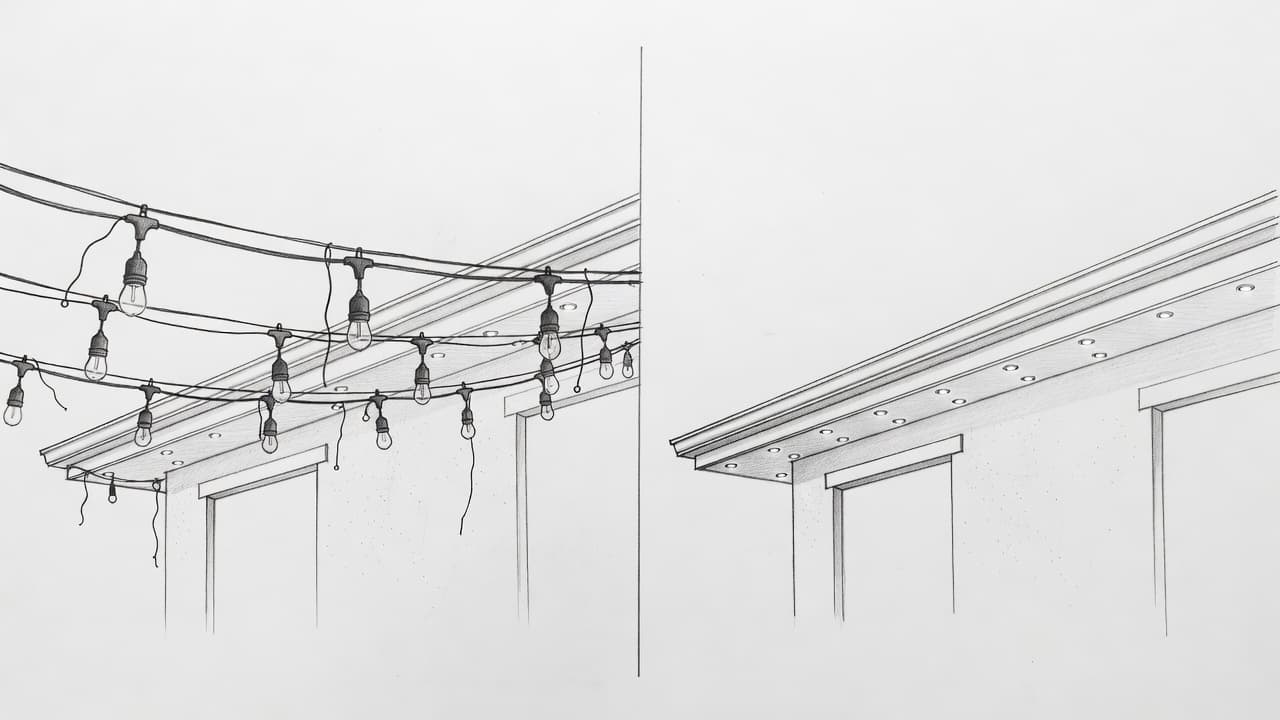
Traditional string lights hang from clips, gutters, trees, pergolas, or patio structures. They’re easy to move and simple to swap when you want a different look. However, they often leave cords, clips, and bulbs visible during the day.
Permanent outdoor lighting is mounted along soffits, fascia, or trim. A professional installation conceals wiring and positions each light for a clean, built-in appearance. Many systems connect to an app, with timers, dimming, schedules, and millions of color options.
Some systems also work with Alexa, Google Home, or Apple Home. Instead of climbing a ladder to change the display, you can adjust colors or brightness from your phone.
 ### Installation and maintenance are easier with a permanent system
String lights require repeated work. You put them up, remove them, store them, then replace strands that failed in the weather. Tangled cords, loose clips, faded bulbs, and damaged plugs can turn a simple decorating project into a long afternoon.
A permanent system stays in place. That means fewer trips up a ladder and no boxes of lights taking up garage space. Professional installation also matters because installers can secure fixtures, protect wiring, seal connections, and match the layout to your home’s exterior.
Traditional lights still have a place. They work well for renters, one-time events, and homeowners who enjoy creating a different seasonal display each year.
Permanent LEDs offer more ways to use outdoor space
Permanent LEDs aren’t limited to December. Warm white lighting can make a patio, porch, or entryway feel inviting on ordinary evenings. Team colors work for game days, while orange and purple can set the tone for Halloween. Christmas, birthdays, graduations, and backyard parties all become easier to light.
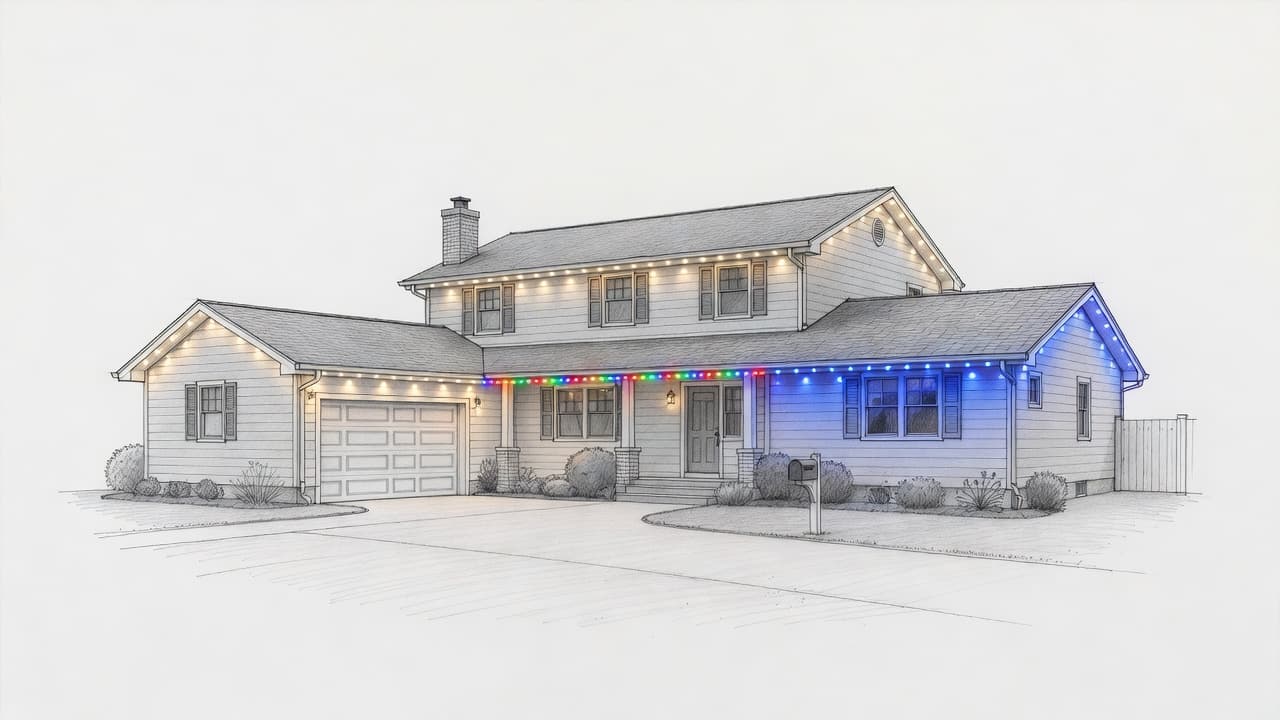 By contrast, most string-light displays offer one fixed color or style. You can change the strands, but that takes more time and hands-on work than updating an app setting.
Permanent lighting gives a home a polished everyday look without turning every evening into a holiday display.
Why Permanent Outdoor Lighting Can Be the Better Long-Term Investment
Quality LED systems are built for long service life and typically use far less energy than older incandescent or halogen bulbs. The U.S. Department of Energy reports that LEDs can last far longer than incandescent lighting, which helps explain their popularity outdoors.
Still, long-term value isn’t only about energy use. It also includes the time saved each season, reduced storage needs, fewer replacement strands, and less ladder work. A permanent system won’t fit every budget or property, but it can make sense for homeowners who want to use exterior lighting often.
Durable, efficient lighting reduces repeat work
Outdoor equipment faces rain, snow, ice, summer heat, and wind. Well-installed permanent systems use sealed LED housings, protected connections, and wiring positioned to handle outdoor exposure. Those details help prevent the problems common with seasonal strands, including sagging lines, cracked insulation, burned-out bulbs, and damaged plugs.
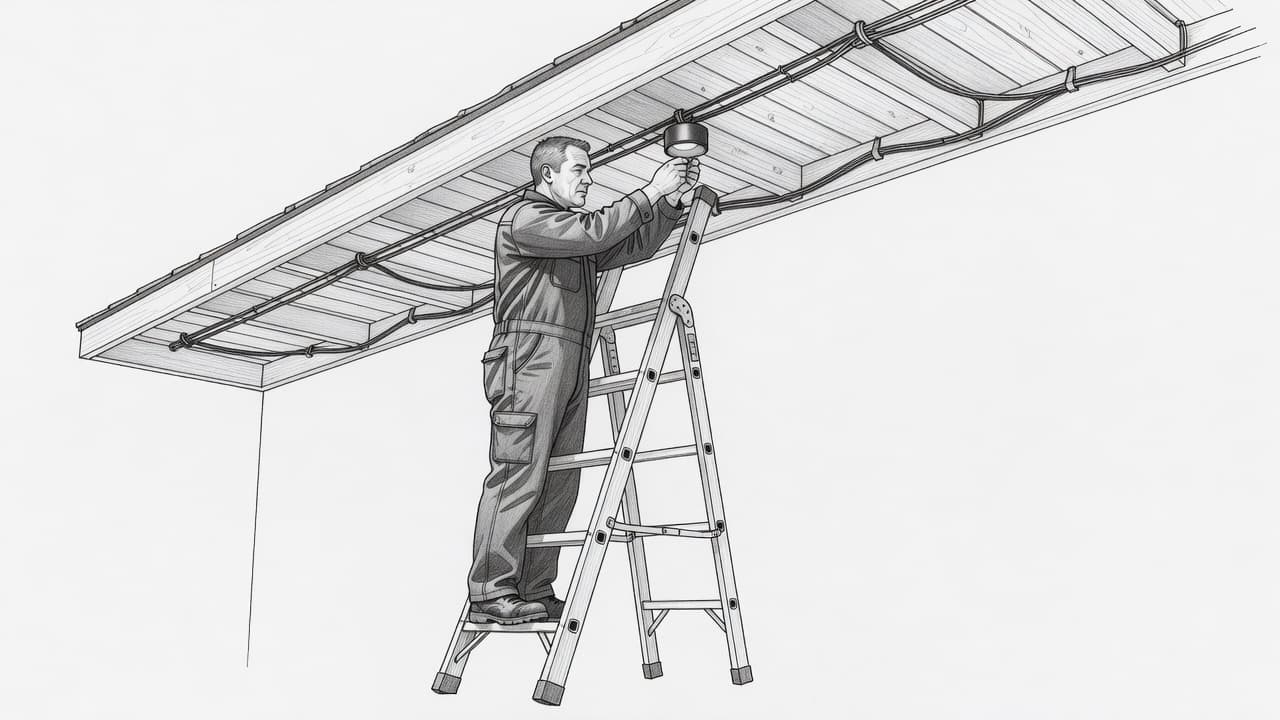 Permanent lights still need occasional inspection. Before choosing an installer, review product quality, warranty coverage, and the company’s service process if a fixture or controller needs attention later.
Built-in lighting can improve safety and curb appeal
Lighting has practical uses beyond decoration. A well-planned system can improve visibility around walkways, stairs, driveways, patios, and pool areas. Timers and brightness controls also let you keep those spaces illuminated without leaving lights at full output all night.
Motion features and scheduled lighting can support a home’s security plan. However, exterior lighting doesn’t replace good locks, cameras, alarms, or attention to entry points.
During the day, concealed fixtures can blend into a home’s trim. At night, they can highlight rooflines and architectural details without visible strands hanging from gutters.
How to Choose the Right System for Your Home and Local Climate
Your roofline, siding, electrical access, and local climate should guide the design. Homes in areas with heavy snow, high winds, intense sun, or frequent storms need suitable mounting methods and weather-rated components.
A trusted local installer should also understand neighborhood guidelines, permit concerns, and common home styles in your area. Call RadGlow for a design conversation that considers your property instead of forcing a one-size-fits-all layout.
Questions to ask before hiring an outdoor lighting professional
Ask direct questions before scheduling an installation:
- Where will fixtures and wiring sit, and how visible will they be during daylight?
- Which app controls the system, and does it work with your preferred smart-home platform?
- Can you set colors, brightness, timers, schedules, and special-event patterns?
- How do the fixtures, connections, and controller handle local weather?
- What does the warranty cover, and who handles future repairs or service calls?
- Can you show completed local projects and explain how you’ll protect siding, trim, and gutters?
A reputable company will explain the design clearly, identify limitations, and avoid promising results your roofline or electrical setup can’t support.
When traditional string lights may still make more sense
String lights remain a practical choice for renters, occasional celebrations, and temporary decorations. They’re also useful for pergolas, trees, patios, and spaces that don’t suit a concealed roofline system.
Homeowners who like changing their display every season may prefer that flexibility. Yet those who want a cleaner exterior, year-round use, and less seasonal maintenance often prefer professionally installed permanent lighting.
The Right Choice Comes Down to How You Live
Traditional string lights offer low commitment and easy seasonal changes. Permanent outdoor lighting offers smart control, weather-ready construction, year-round versatility, and a cleaner daytime appearance.
The strongest long-term investment is the one that fits your home and how often you’ll use it. Call RadGlow to discuss your property, review lighting options, and plan an outdoor system that works for your local conditions.