
Year-round roofline lighting can make your home easier to find, more welcoming after dark, and ready for any holiday without climbing a ladder. However, the colors that look striking on one house can feel harsh or cluttered on another.
The right permanent lighting color scheme depends on your exterior materials, street setting, and how often you plan to change the display. Before booking an installation, confirm that the provider serves your area and offers the system features you want.
Start With the Look and Lighting Needs of Your Home
Begin with the parts of your home that stay visible after sunset. Siding color, brick tone, stonework, trim, roof shape, and landscaping all affect how LEDs appear from the street.
A red-brick Colonial with cream trim usually suits softer light. Meanwhile, a home with charcoal siding, black-framed windows, and clean rooflines can handle a brighter neutral or cool white. Trees, retaining walls, and nearby streetlights also change the overall effect.
Consider what you want the lights to do on ordinary nights. Some homeowners want a subtle glow at the entry and roofline. Others want programmable colors for holidays, graduation parties, game days, and neighborhood events. Permanent lighting can also improve visibility around walkways and driveway edges, though it shouldn’t replace properly designed security lighting.
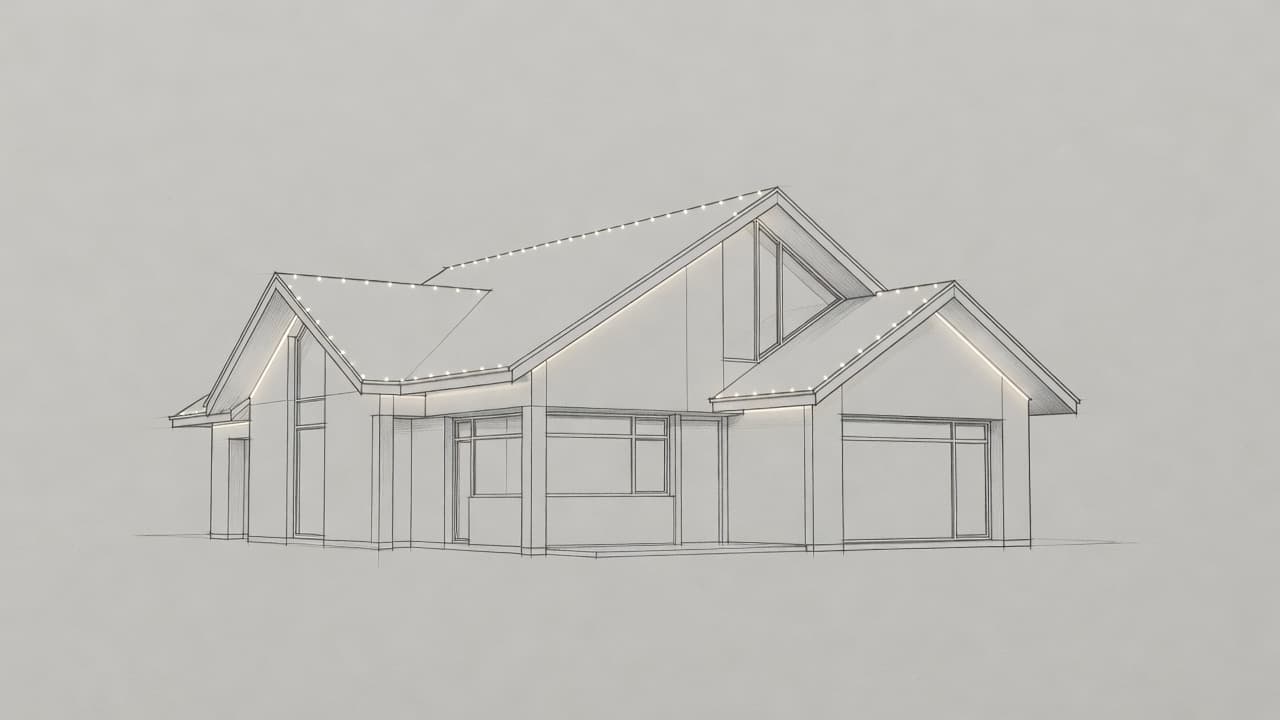 View samples after dark before you make a choice. A color that looks balanced in a showroom can look much stronger on a full roofline. Stand across the street during the final test, because that is where neighbors and guests will see the display.
Match the Color Temperature to Your Exterior
White light isn’t one universal color. Warm white, usually around 2700K to 3000K, has a soft golden tone. It often works well with brick, natural wood, beige siding, and traditional architecture.
Neutral white feels cleaner and less yellow. It can suit white, gray, or taupe exteriors without looking icy. Cool white, often in the 4000K to 5000K range, creates sharper definition on modern homes with concrete, dark siding, or metal details.
Keep the roofline on one white temperature. Mixing warm white and blue-white LEDs often makes the installation look mismatched. Also, a bright blue-tinted light can overpower a warm traditional exterior.
Choose Between One Consistent Color and a Flexible System
A single-color system gives your home a polished, everyday look. It is a practical choice if you mainly want warm or neutral white along the roofline.
Programmable RGB or RGBW lighting gives you more options for seasonal displays. Before choosing a system, ask whether it can dim, save presets, divide lights into zones, and produce a convincing white light. RGBW systems often offer a better dedicated white than RGB-only options.
The most useful setup has a calm everyday setting and easy controls for occasional color.
Build a Permanent Lighting Color Scheme That Looks Good Year-Round
A strong color plan begins with a base setting you will enjoy most nights. For many homes, soft warm white is the safest choice. It brings attention to the roofline and entry without turning the house into a nightly holiday display.
Then add limited accent colors for special occasions. Red and green work for Christmas, orange fits fall gatherings, and red, white, and blue suit Independence Day. Team colors can be fun for a local game or school celebration, but they usually look better for a few hours than every night.
Restraint matters. Two main colors are usually enough for a roofline display. When every gable, shrub, tree, and patio runs a different pattern, the architecture disappears behind the effects.
Use Brightness, Spacing, and Zones to Control the Effect
Color is only part of the final result. Brightness, fixture spacing, viewing angle, and roofline height can make the same shade feel subtle or overwhelming.
Keep the main roofline consistent, then use separate zones for the front entry, patio, trees, or landscaping. This lets you run a softer white at the house while adding a small seasonal accent near the porch.
Ask the installer how you can control brightness through the app or controller. Timers and automatic schedules can switch lights on at dusk and off before bedtime. Avoid glare through bedroom windows, into a neighbor’s yard, or toward the street.
Avoid Color Choices That Quickly Feel Dated
Common mistakes usually come from trying to display too much at once. A warm brick home can clash with intense cool blue-white. Five colors on one roofline can look busy rather than festive.
Full brightness all night also creates an uncomfortable look on a residential street. Lower output often makes the roofline appear more refined.
Finally, don’t choose a system with limited controls. Your preferences will change with seasons, events, and exterior updates. Easy dimming and presets keep permanent lights useful long after the first holiday season.
Confirm the Installer, Service Area, and Installation Details Before You Call
A permanent lighting system should look nearly invisible during the day. Ask local providers how they mount the track, where they place wiring, and whether the installation suits your roofline, gutters, fascia, and trim.
Look for weather-rated materials, low-profile components, safe electrical connections, and clear warranty terms. Outdoor electrical work should use appropriate weather protection and GFCI outlets where required. The provider should also explain what happens if a controller, light section, or connection needs repair later.
Before responding to any lighting promotion, verify the company’s current services, location, phone number, and service area. RadGlow is listed as an elite spray tan and therapeutic beauty studio at 5609 Patterson Ave, Suite D, Richmond, Virginia, with phone number 804.908.3965. Available business information does not identify RadGlow as a permanent lighting installer.
Ask These Questions During a Lighting Consultation
Bring a few direct questions to the appointment:
- Which white color temperature fits my siding, brick, trim, and roofline?
- Does the system support both warm white and holiday colors?
- Can I dim individual zones and save everyday presets?
- Where will the controller, wiring, and power connections be installed?
- How does the system handle rain, heat, wind, and winter weather?
- What maintenance and repair support is available after installation?
Request an evening demonstration or photos of completed nearby projects. Nighttime examples reveal far more than daytime installation photos.
A Color Plan You Will Enjoy Every Night
The best permanent lighting colors support your home’s character instead of competing with it. Match the white temperature to your exterior, choose an everyday setting you can live with, and reserve bold colors for short-term celebrations.
Controlled brightness and separate zones keep the display attractive for you and considerate of nearby homes. Contact a verified local permanent lighting installer for a roofline assessment and color recommendations tailored to your property.