
Outdoor security lighting shouldn’t make your home feel like a stadium. Harsh floodlights can glare through windows, disturb neighbors, and leave deep shadows beyond their reach.
Smart outdoor lighting uses focused fixtures, motion sensors, schedules, and camera connections to make important areas easier to see. A balanced plan can help deter unwanted activity while keeping your property comfortable after dark. RadGlow can help homeowners plan lighting that fits both the home and the way it is used.
How Smart Outdoor Lighting Improves Home Security Without Floodlights
Smart outdoor lighting improves security by putting light where it has a job to do. Instead of blasting the entire yard, it can light the front door, side gate, driveway, back steps, and narrow paths around the house.
A visitor approaching a well-lit entry is visible. So is someone walking near a garage, window, or side yard. That visibility removes many of the dark spots where a person could stand unnoticed. It also helps you find keys, spot uneven pavement, and see who is outside before opening the door.
 Motion activation adds another useful layer. A focused light that turns on when someone enters a side passage or approaches a gate can draw attention without leaving that fixture on all night. Many smart fixtures use passive infrared, or PIR, sensors that detect changes in heat and movement.
Schedules also make a home look attended. Porch, pathway, and landscape lights can come on around dusk, then dim or switch off at a chosen time. When you are away, smart controls can vary a normal lighting routine instead of leaving every exterior light burning until morning.
Light works best when it reveals a person’s route and the home’s entry points, not when it creates glare.
Security lighting supports other protections, but it doesn’t replace them. Strong door locks, working window locks, cameras, alarms, and common sense still matter. A camera also needs the right light to capture useful footage. Aim fixtures away from the lens, because direct glare can wash out faces and license plates.
A layered setup usually feels more natural than a single bright fixture:
- Soft ambient light can outline a porch, patio, or front landscape.
- Focused task light can cover door hardware, steps, walkways, and the driveway.
- Narrow accent or spot lighting can brighten gates, shrubs near windows, and other vulnerable edges.
Together, these zones make a property easier to read after dark without turning it into a floodlit lot.
Build a Non-Floodlight Security Lighting Plan Around the Property
Start with a walk around your home after sunset. Bring a flashlight and follow the route a guest, delivery driver, or intruder could take. Look for places where footing is unclear, sightlines disappear, or a person could approach a door without being seen.
Pay close attention to the front entry, garage, side gate, rear door, trash area, basement access, and fence lines. Dense shrubs beside windows may need pruning as well as light. A fixture cannot solve a blocked view.
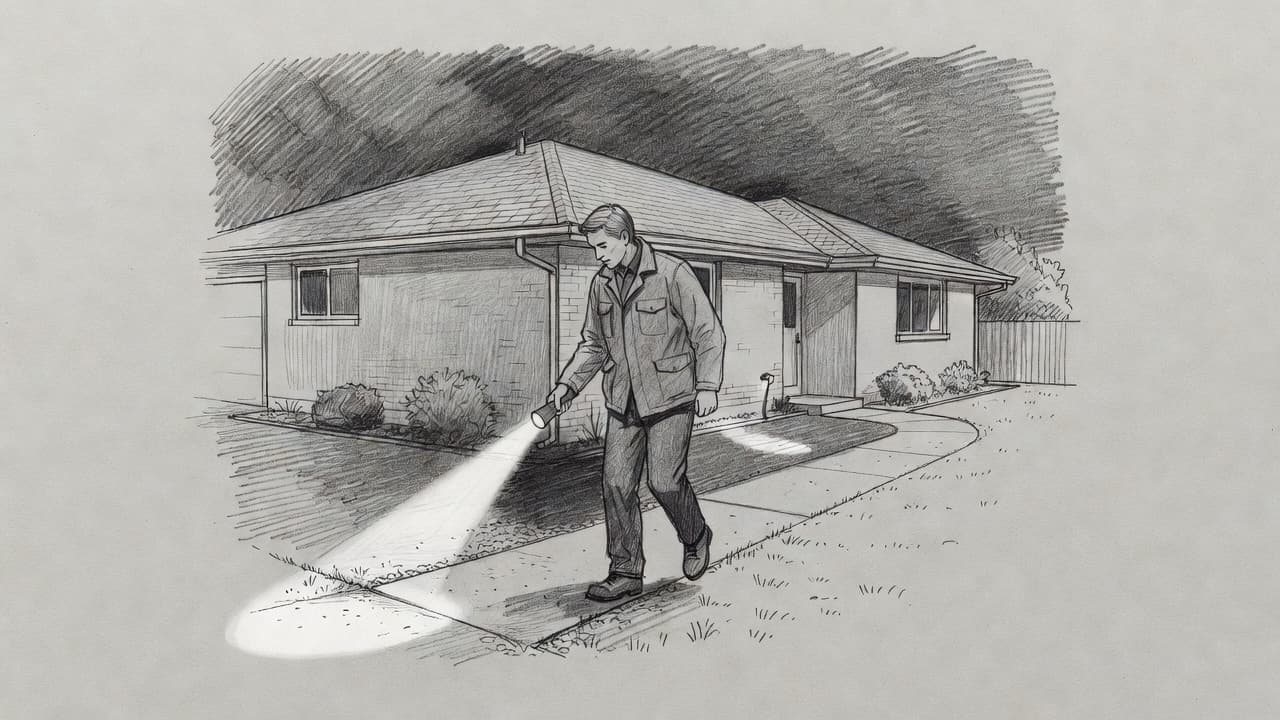 Next, decide what each fixture should illuminate. Path lights should throw light downward onto the walking surface. A downlight mounted near a side door can cover the handle, threshold, and first few steps. Shielded spotlights can reach a gate latch or the corner beside a garage without spilling across the whole yard.
Controlled coverage matters more than maximum brightness. Too much light creates glare, which can make it harder for your eyes and cameras to see beyond the bright area. It can also shine into a neighbor’s bedroom or distract drivers on a nearby street.
Choose weather-rated LED fixtures made for outdoor use. LEDs work well with motion controls because they reach full brightness quickly. For smart controls, check whether fixtures and hubs work with the system you already use, such as Alexa, Google Home, Apple Home, or a compatible security camera platform.
Sensor placement needs care. Aim a motion sensor across the expected path of travel instead of directly at it. Test the detection range after installation, then adjust sensitivity so trees, pets, or passing traffic do not trigger constant alerts.
When Professional Outdoor Lighting Installation Makes Sense
A few battery lights may help with a small walkway. However, a whole-property security lighting plan needs more thought than placing fixtures where they look attractive during the day.
A professional can assess electrical load, fixture spacing, transformer capacity, cable routes, and weatherproof connections. Low-voltage wiring still needs protection from lawn tools, roots, standing water, and future landscaping work. Poor connections can lead to flickering lights, failed zones, or hard-to-find faults.
Placement also affects how the system performs. A sensor aimed too broadly may catch street traffic. A spotlight at the wrong angle can shine into a neighbor’s home. Cameras need enough even illumination to record activity, but lights should not point directly into their lenses.
RadGlow can help you map your property’s dark approaches and select fixtures for doors, paths, driveways, gates, and outdoor living areas. The goal is a security-minded design that still looks at home after sunset.
If you want guidance on a tailored layout or professional installation, call RadGlow to discuss outdoor lighting for your property.
A Safer View After Dark
Smart lighting improves home security by making key areas visible and signaling activity when motion occurs. Focused beams, weather-ready fixtures, and compatible controls can cover the places that matter without harsh floodlights.
Thoughtful placement also supports cameras, safer walking routes, and a more comfortable home exterior. Homeowners who want a balanced, property-specific plan can call RadGlow to discuss outdoor lighting.